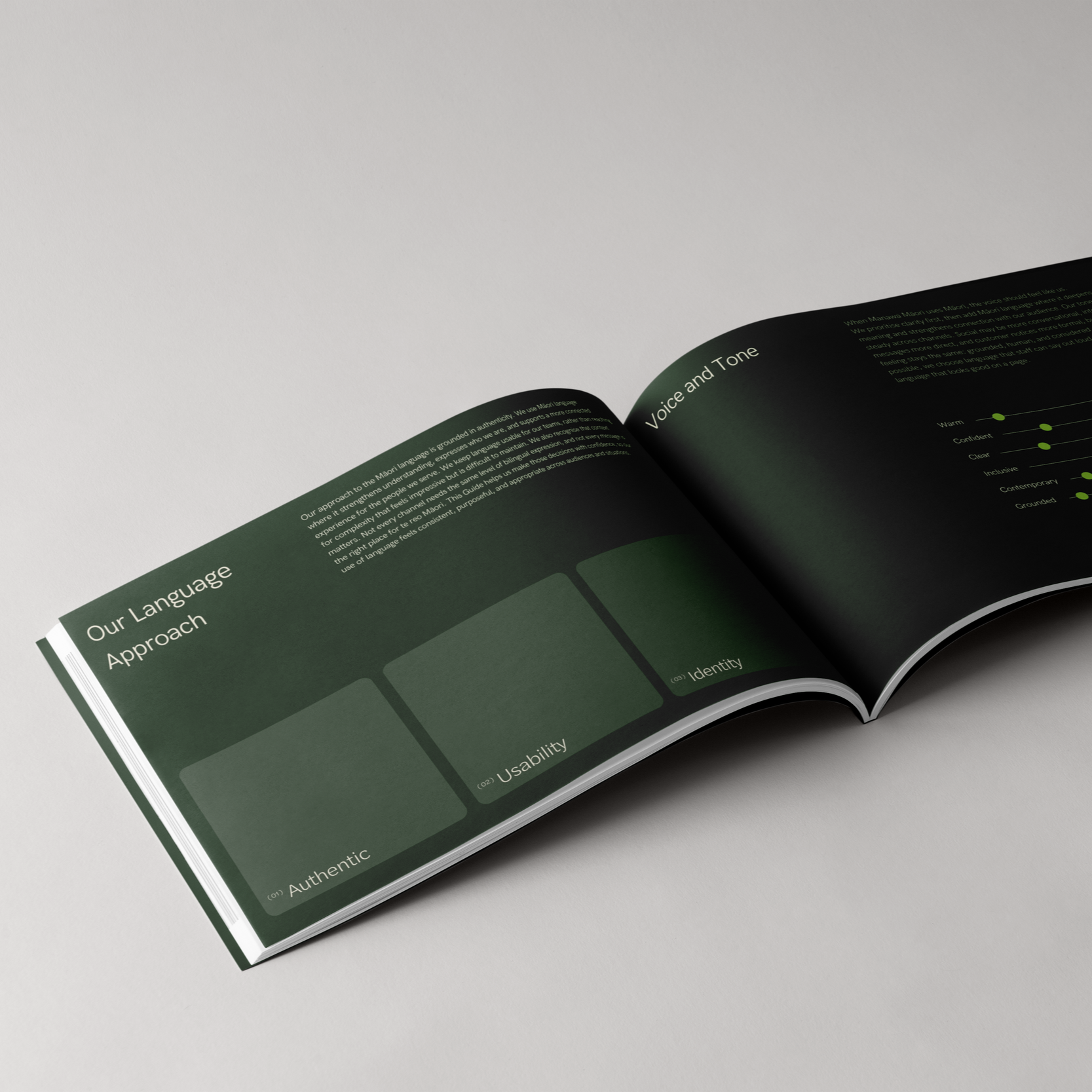
Your language infrastructure

The Māori Brand Language Guide is developed specifically for each organisation we work with, which means the content within is theirs alone. But the structure, the depth, and the methodology are consistent. This walkthrough is designed to give you a clear view of what sits behind each section, so you can understand the value before we begin.

Five sections, one framework

Inside Each Section

Section One

Introduction

Sets the foundation for the guide: why it exists, who it's for, and the principles that shape every decision within it.

Opening Words

A purposeful opening that frames the organisation's relationship to te reo Māori. Not a corporate statement, but a positioning that staff can connect with. Written in a way that sets the tone for everything that follows.

How to Use This Guide

Practical orientation: who should use which sections, where to go when you're unsure, and how the guide connects to the Language Database. Designed so someone can open it and know exactly where to look in under 30 seconds.

Our Language Approach

We identify the guiding principles that shape every language decision across the guide. These aren't abstract values. Each principle comes with a clear explanation of what it looks like in practice for your brand.

Section Two

Foundations

The rules and reference points your team will return to most. This section defines the voice, the principles, and the technical standards that keep language consistent across the organisation.

Voice and Tone

A calibrated voice profile, built for your brand. Not a generic tone guide, but a spectrum model that maps where your language sits across dimensions like warm to formal, confident to exclusive, contemporary to traditional. Includes guidance on how tone shifts across audiences and channels, while the voice remains consistent.

Example: Voice Spectrum (Illustrative)
Warm
Formal
Confident
Exclusive
Clear
Poetic
Inclusive
Exclusive
Contemporary
Traditional
Grounded
Promotional
Respectful Use Principles

Clear, usable guidance on cultural safety: when and how to use te reo Māori with confidence, and how to avoid common missteps. Covers context-appropriate use, when translation is needed, when it isn't, and what to do when you're unsure. This section removes the hesitation that often prevents staff from using te reo Māori at all.

Macrons and Spelling

Technical standards for macron use, including when and where they must appear, how to handle system limitations, place name conventions for your region, and a quick-reference guide for the most commonly used terms. This section protects consistency across every platform, from print to social to email signatures.

Section Three

Style and Structure

How te reo Māori appears alongside English in practice. Formatting, hierarchy, and channel-specific rules that remove guesswork for your comms and marketing teams.

Bilingual Style Guide

Rules for how bilingual content is formatted: where te reo Māori leads and where English does, italic and non-italic conventions, bracket usage, heading hierarchy, and sentence-level integration versus standalone moments. Specific enough that a marketing partner or designer can apply it.

Channels in Practice

Channel-specific guidance tailored to the places your brand actually shows up: website copy, social media, email, event signage, press releases, stakeholder communications, and internal documents. Each channel gets its own formatting and tone calibration, because what works on Instagram works differently in press.

Website Social media Email marketing Press releases Stakeholder comms Event signage Internal docs Presentations Email signatures
Section Four

Language Library

This is the section your team will open most. It's a ready-to-use reference of approved terms, phrases, and copy. All vetted, all in context, all applicable immediately.

Core Terms

A curated library of approved Māori terms and phrases specific to your organisation, including sector-specific terminology. Each term includes Māori, its English meaning, context for use, and the tone it suits (formal, warm, elevated).

Say This, Not That

Side-by-side examples that show the difference between getting it right and the common mistakes organisations make. Covers phrasing, context, spelling, and tone. This section builds confidence quickly as staff can see the pattern and apply it.

Copy Library (Ready-to-Use)

Pre-written, approved copy blocks your team can lift and use directly: email openings and closings, social media phrases, event welcomes, seasonal greetings, and stakeholder acknowledgements. Each entry is tagged by channel, tone, and context. No need to write from scratch or second-guess.

Section Five

Stewardship

Language frameworks need care. This section ensures the guide stays accurate, current, and trusted over time.

Care and Versioning

Guidelines for when and how the guide should be updated, who has authority to make changes, and how updates are communicated across teams. Includes a versioning protocol so everyone knows they're working from the latest version.

Guide Ownership

Clear ownership: who approves new language, who reviews additions, and how external partners are onboarded to the guide. Protects the integrity of the resource as the organisation and daily usage grows.

What you receive

Beyond the Guide

01
Māori Brand Language Guide
14 to 18 page PDF. Designed for staff-ready use and easy internal distribution. Covers all five sections outlined in this walkthrough.
02
A5 Staff Phrase Sheets
Design-ready take-home sheets with practical greetings, common phrases, and quick-reference tips. The bridge between guide and daily use.
03
Your Language Database
A filterable, living reference your team and partners can search by context, channel, and tone. Updated as your language needs evolve.